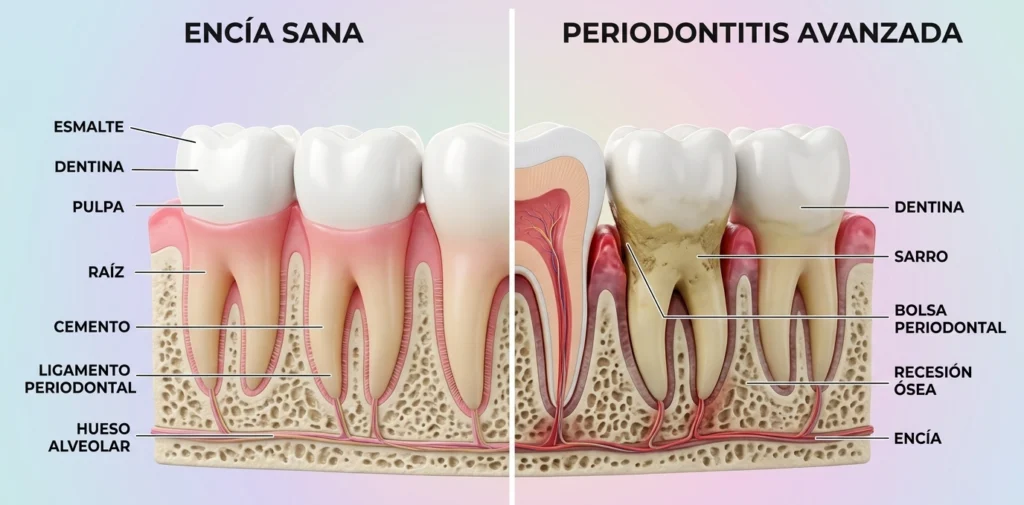
 What Is Periodontal Disease?
Periodontal disease is an inflammatory condition that can progressively affect the tissues surrounding and supporting the teeth. Early disease may present with gum inflammation and bleeding. As it progresses, it can cause attachment and bone loss, tooth mobility, and, in advanced cases, tooth loss.
What Are the Warning Signs?
- Bleeding gums.
- Swollen or tender gums.
- Persistent bad breath.
- Gum recession.
- Teeth appearing longer.
- Tooth mobility.
- Changes in tooth position.
- Pus around the gums.
The absence of pain does not necessarily mean that your gums are healthy.
Why Is Periodontal Treatment Important?
Periodontitis can be controlled through appropriate periodontal treatment and long-term maintenance. The European Federation of Periodontology recommends a stepwise approach including risk-factor control, biofilm control, supra- and subgingival instrumentation, periodontal surgery when indicated, and supportive periodontal care.
Maintenance Is Part of the Treatment
Patients who remain consistent with supportive periodontal care tend to have better long-term outcomes. Regular professional visits and effective daily oral hygiene are essential components of periodontal care.
Periodontics and Dental Implants
Periodontal health is also extremely important when a patient is considering dental implants. A history of periodontitis, smoking, poor biofilm control, and other factors may increase the risk of disease around dental implants.
Healthy Gums Help Protect Your Smile
Healthy gums are a fundamental part of a stable, long-term smile. Prevention and early diagnosis can make the difference between losing a tooth and keeping it.
Dr. Adrián Garita S.
Periodoncia · Implantología · Estética Dental
Smile Studio Dental Clinic — Costa Rica
Scientific Literature
- Sanz M, Herrera D, Kebschull M, et al. Journal of Clinical Periodontology. 2020;47(Suppl 22):4–60.
- Rattu V, et al. Journal of Clinical Periodontology. 2023;50(10):1371–1389.
- Lee CT, et al. Journal of Dental Research. 2015;94(6):777–786.


